
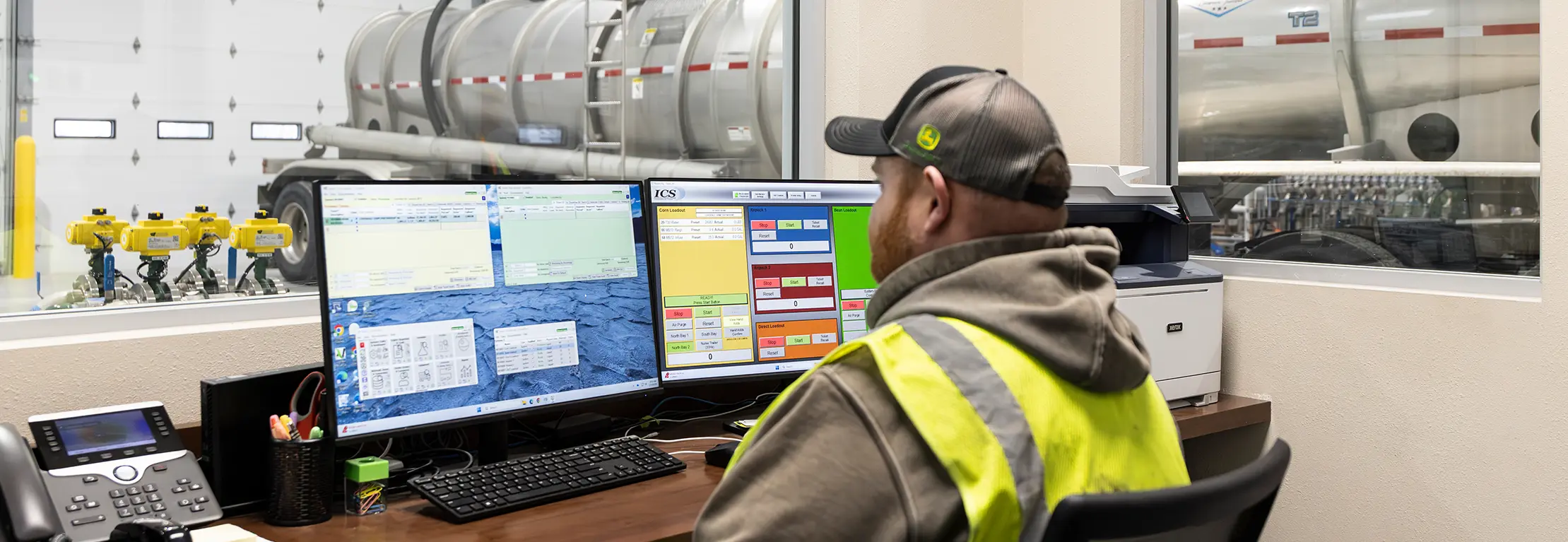
Building a new liquid and/or dry fertilizer facility — or retrofitting an existing one? One of the most important decisions you’ll make is selecting your automation platform.
While many of the industry’s top providers offer similar high-level functionality, the differences are often found in the details. Those differences can significantly impact your organization’s efficiency, scalability, and long-term ROI.
Here are seven key factors to consider when evaluating fertilizer plant software.
1. Scope
Understanding both your current and future product scope is critical to maximizing your investment.
- Are you operating a single location or multiple sites?
- Do you need integration between plant software and your back office?
- Are you automating liquid, dry, or both?
- What processes need automation? Do you need unattended processes?
- Are you solving a short-term challenge or planning for the next 5–10 years?
Before selecting a platform, evaluate the projected lifespan of your purchase. In a competitive landscape, future-proofing can be just as important as solving today’s problem.
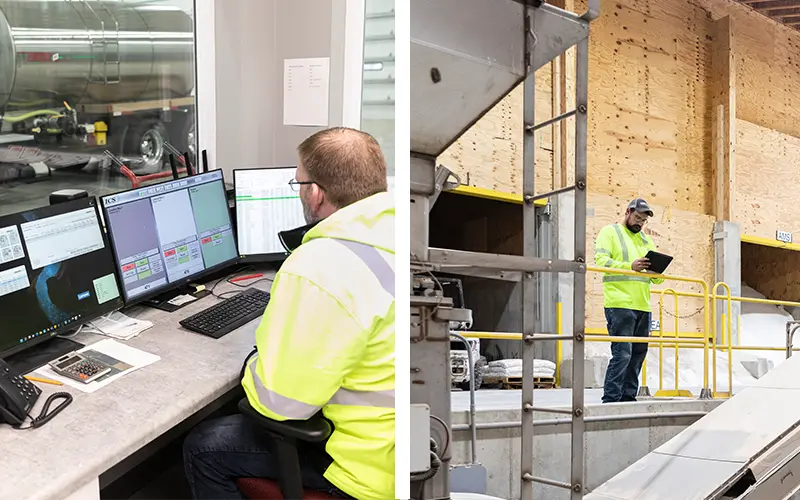
For example, Murray Equipment’s line of ICS Controls ranges from single-product presets to fully integrated, multi-location liquid and dry automation systems. Many ICS solutions are expandable and subscription-based to support long-term scalability.
It’s important to understand if your chosen provider can match your product scope, not just in terms of number of locations and functionality, but also in terms of any potential future challenges.
2. Functionality
Most top providers of fertilizer plant automation can manage both liquid and dry fertilizer operations. However, how they accomplish this varies significantly.
Here are three critical aspects to evaluate:
A. Ease of Use
Intuitive software reduces training time, lowers the risk of operator error, and minimizes downtime.
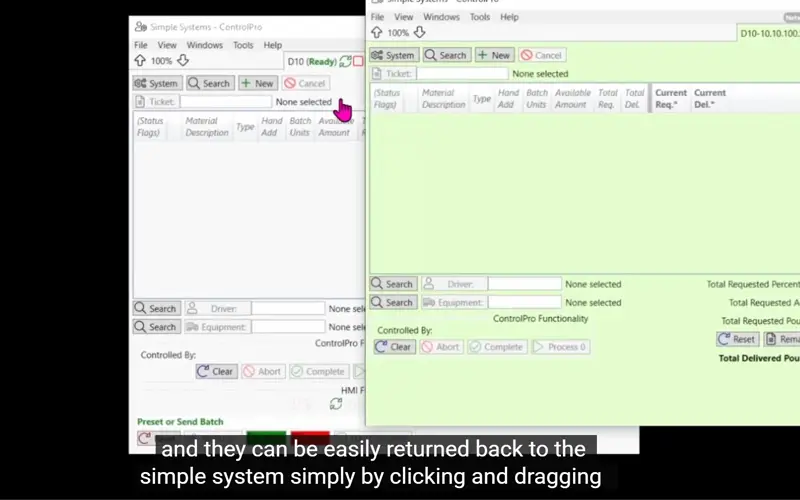
With ICS Controls, simplicity is designed to coexist with powerful functionality. Through seamless integrations and intelligent programming, complex processes can be managed with just a few clicks or taps.
B. HMI Options
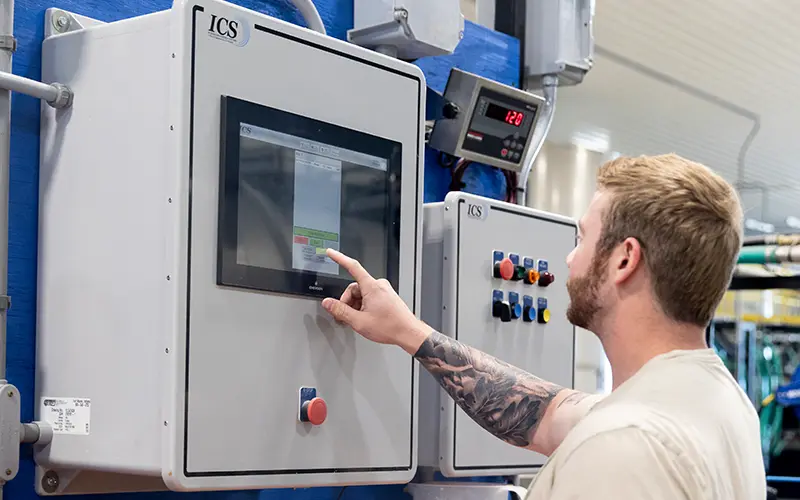
HMI (Human Machine Interface) determines how and where operators interact with the controls — and it can directly impact both facility layout and employee safety.
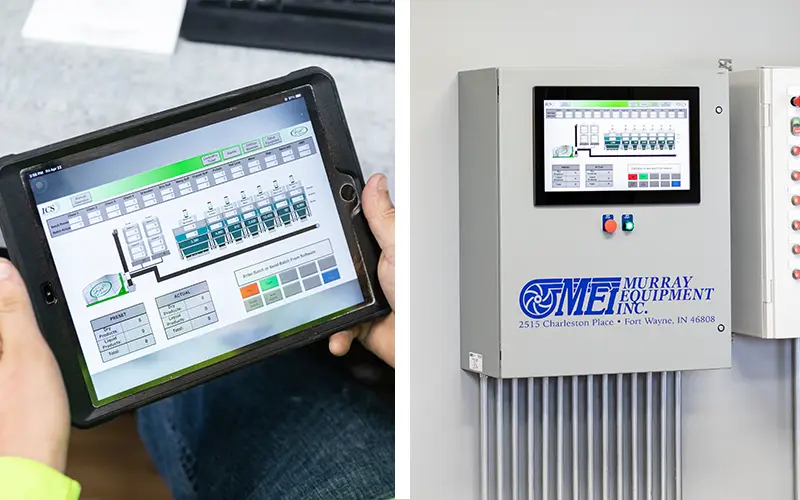
Murray Equipment’s ICS Controls can operate from:
- Computers - desktops and laptops
- Touchscreen control panels
- Smart devices - tablets and mobile phones
This flexibility allows facility managers to choose the configuration that best supports safe and efficient operations.
C. Equipment Integrations
Automation software must communicate effectively with your equipment. For full automation, it will also integrate with Agronomy/ERP software as well. The technology behind these integrations — and how well providers collaborate — can dramatically affect reliability and performance.
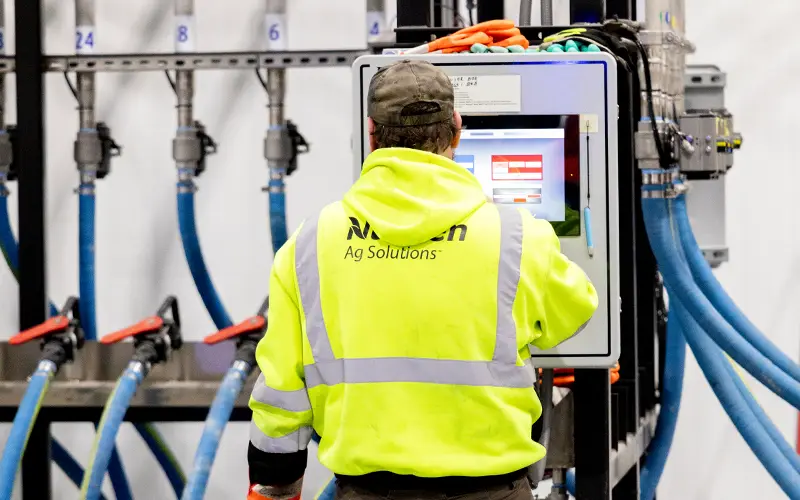
MEI is the industry’s ONLY provider of both liquid fertilizer equipment AND software through our ICS Controls. Our in-house mechanical engineers work alongside electrical and software engineers to ensure seamless equipment-to-software integration.
In our experience, when hardware and software are developed together, integration gaps are minimized.
3. Provider Longevity and Stability
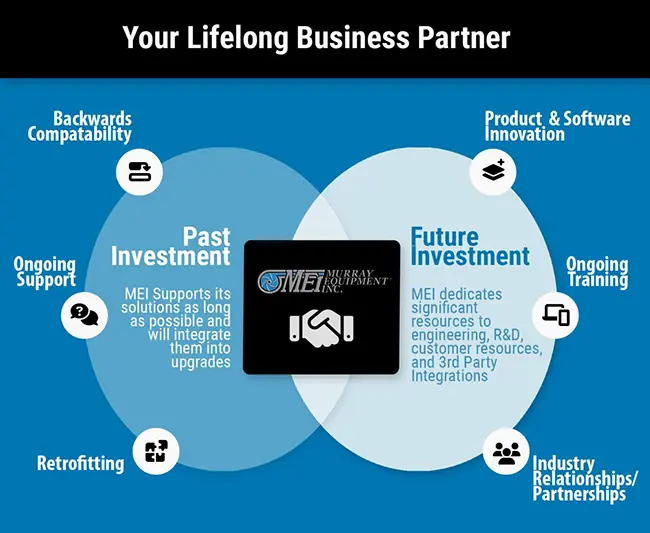
Building or retrofitting a fertilizer facility is a major investment. You need confidence that your provider will be there for the life of that facility.
It’s important to ask:
- How long has the company been in business?
- What is their product end-of-life policy?
- How long will they support your system after end of life?
Murray Equipment has been serving the industry for more than 75 years and supports products long after end of life including our line of ICS Controls. On the equipment side, that includes pump and meter repairs. We don't force adoption of new products, and support products for as long as possible.
4. Ongoing Training and Support Resources
In situations with high turnover or an influx of seasonal employees, Ag retailers, manufacturers, and wholesalers can incur high ongoing training costs to support their fertilizer plant software.
To offset this, look for:
- Intuitive user interfaces
- On-demand training resources
- Accessible knowledge bases
- Video libraries
At MEI, we not only continue to evaluate our ICS Controls to ensure as we add new features that we continue to deliver ease of use, but we also back our software with online training materials and documentation to reduce onboarding time and improve consistency between operators.
5. Integrations & 3rd Party Relationships
No matter the level of control and automation that you choose, integrations will happen — whether between equipment and controls or between plant software and back-office systems.
It’s not just the technology and the approach to the integrations that matters, but also the relationships between providers.
When evaluating providers and their relationship, consider:
- Who owns the integration?
- Who takes the support call?
- Is there finger-pointing between vendors?
- Do providers communicate well?
For liquid fertilizer retailers, Murray Equipment offers a one-stop-shop approach — providing both equipment and ICS Controls. When issues arise, there’s a single point of accountability.
For dry fertilizer retailers and back office software, we still maintain this same approach to provide a more seamless customer experience.
Having a partner that takes more ownership of issues and not less will have a big impact on your bottom line.
6. R&D & Future Enhancements
In today’s competitive landscape, it’s important to not just choose the software and automation provider of today, but one that is positioned to continue to give you a competitive edge in the next 5-10 years.
To do that, we recommend asking:
- How frequently are new features released?
- How are feature requests evaluated?
- How quickly are enhancements implemented?
MEI’s fertilizer plant software, ICS ControlPro, operates as a PaaS (Platform as a Service), meaning subscribers continuously fund and receive new features throughout their subscription lifecycle. Customer-driven development ensures that enhancements reflect real-world challenges and industry best practices from operations across the country.
7. Customer Responsiveness
Choosing an automation package means entering into a long-term relationship with that provider.
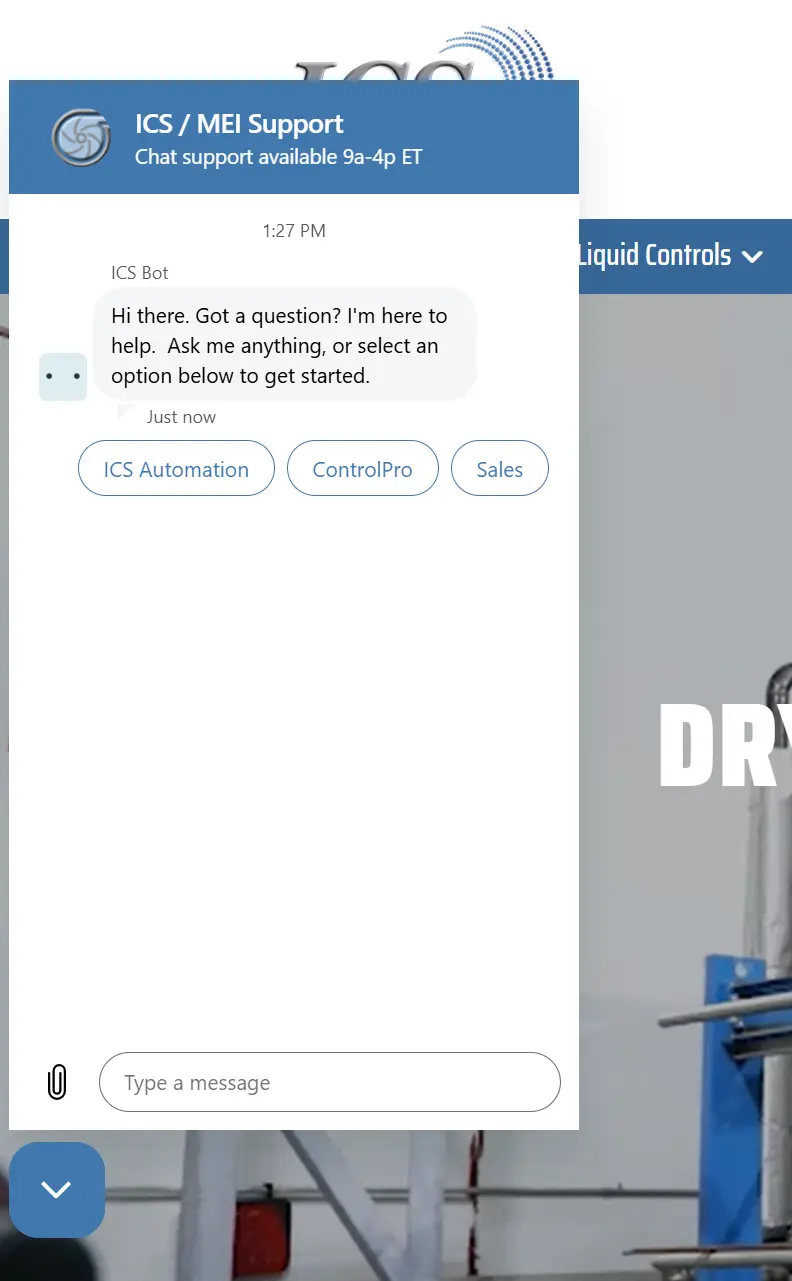
If your software experiences a glitch during planting season, responsiveness matters. Your ability to serve growers depends on your provider’s ability to serve you.
At MEI, we understand the critical nature of what we do. To support ICS Controls, we offer:
- Online chat
- After-hours support
- Training videos
- Knowledge databases
At the end of the day, your success — and your customers’ success — depends on system uptime and responsive support.
Final Thoughts
Choosing fertilizer plant software isn’t just about features. It’s about scalability, integration, longevity, and partnership.
By evaluating scope, functionality, stability, support, and future development, you can select a platform that not only solves today’s challenges — but positions your operation for long-term growth.
